Discover the best web development project ideas for small businesses in 2026, with a practical framework, cost comparisons, and expert planning tips to help you choose wisely.
Best web development project ideas for small businesses
TL;DR:
- Choose web projects based on business goals, target audience, and resource availability.
- Start with simple, low-cost sites like portfolios, landing pages, or product cards for quick success.
- Proper planning, clear scope, and strategic goals are essential for project success and ROI.
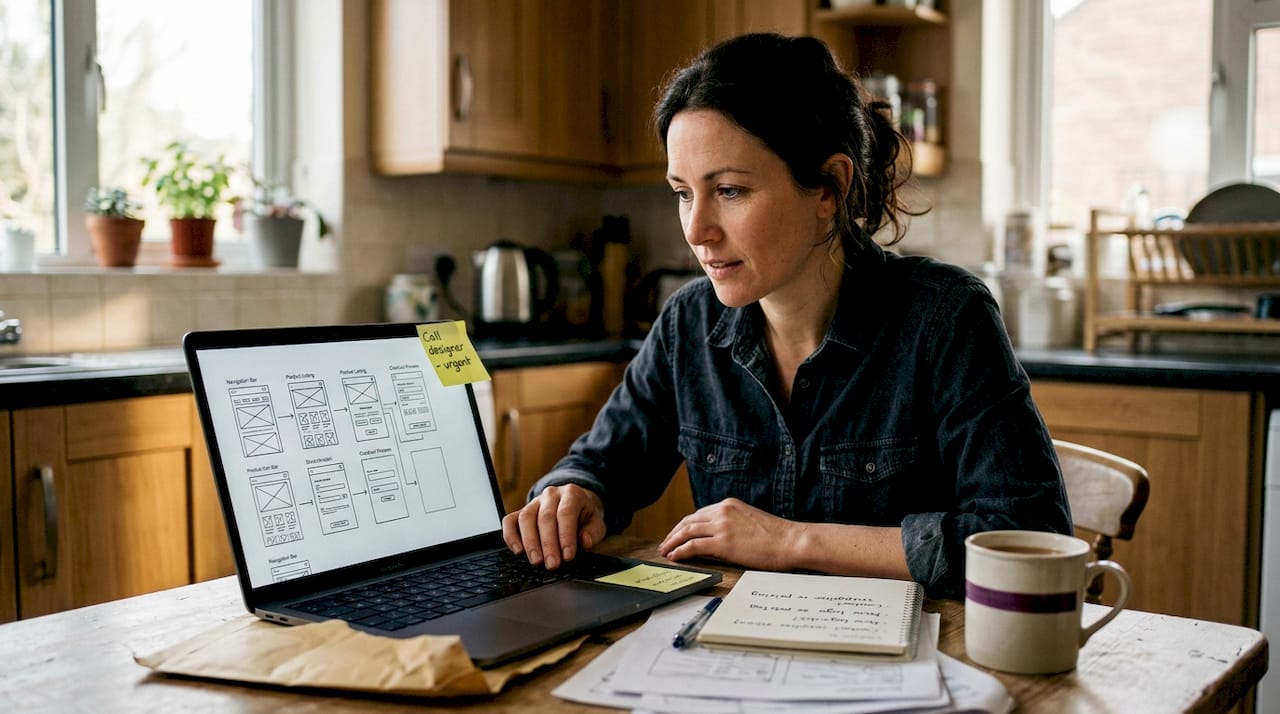
Picking the right web development project feels overwhelming when every option promises results. Portfolio sites, eCommerce stores, landing pages, booking systems — the list never seems to end. Yet the choice you make at the start shapes everything: your budget, your timeline, and whether the finished product actually moves your business forward. Most small business owners waste money on projects that look impressive but solve the wrong problem. This guide cuts through the noise with a practical framework, real project comparisons, and honest advice on who should build your site, so you can make a confident, strategic decision from day one.
Table of Contents
- How to choose the right web development project
- Portfolio, landing, and product card sites: quick wins for credibility
- Full-featured restaurant, blog, and eCommerce sites
- Freelancer, agency, or hybrid: who should build your project?
- Risk management and planning tips for project success
- Why the best web projects put business goals before code
- Need expert help? Get your project launched right
- Frequently asked questions
Key Takeaways
| Point | Details |
|---|---|
| Prioritise business needs | Choose web projects based on concrete business goals rather than flashy features. |
| Start simple, scale later | Simple sites like a portfolio or landing page give fast results and can be expanded over time. |
| Plan to avoid overruns | Invest at least half your project effort in upfront planning to keep costs and timelines under control. |
| Pick the right builder | Match freelancers, agencies, or a hybrid approach to your project’s complexity and support needs. |
How to choose the right web development project
With the selection challenge in mind, let’s start with a framework to ensure the project you choose delivers the results you need.
The single biggest mistake small businesses make is choosing a project based on what looks good rather than what works. A visually stunning site that doesn’t convert visitors into enquiries is just an expensive brochure. Before you brief anyone, you need to be clear on what you actually want the site to do.
Start by asking yourself three questions. What is my primary business goal right now? Who is my target audience, and where are they in their buying journey? What resources — budget, time, and technical knowledge — do I genuinely have available?
The answers shape everything. A service business chasing local leads needs something very different from a product brand scaling nationally. As Smashing Magazine advises, you should start with commercial strategy and buyer intent before you even think about visual design.
Here’s a quick checklist to guide your decision:
- Define your goal first: Lead generation, direct sales, brand credibility, or content marketing?
- Know your audience: Are they browsing casually or ready to buy? Desktop or mobile?
- Set a realistic budget: Include build, maintenance, hosting, and future updates.
- Assess your internal capacity: Who will manage content and respond to enquiries after launch?
- Plan beyond launch: A site that can’t be updated quickly becomes a liability.
Pro Tip: Good portfolio project planning always maps each feature back to a specific business outcome. If you can’t explain why a feature exists, cut it.
Avoid chasing trends. A chatbot or animated hero section might look modern, but if your audience is a local tradesperson’s customer base, simplicity and speed will always win.
Portfolio, landing, and product card sites: quick wins for credibility
Now that you have a selection framework, let’s look at the simplest and most effective project types first.
Not every business needs a complex, multi-page website from day one. In fact, starting small and focused often produces better results faster. Practical web development projects for small businesses include portfolio websites, landing pages, contact forms, product cards, blog homepages, and eCommerce stores — and the first three on that list are the quickest wins available.
Portfolio websites are ideal for freelancers, consultants, and service businesses. They showcase your credentials, build trust, and give prospects a reason to get in touch. A well-structured portfolio answers the question “why should I hire you?” before the visitor even scrolls halfway down. See how a B2B portfolio example handles this for a professional services client.

Landing pages are purpose-built for a single campaign or offer. No navigation distractions, no off-topic content. Just a clear headline, a benefit-led description, and a call to action. They’re the sharpest tool for lead generation and work brilliantly alongside paid advertising. A simple landing page focused on one audience segment will nearly always outperform a generic homepage.
Product cards are modular content blocks that showcase individual services or items. They’re reusable, easy to update, and give your offering visual structure without requiring a full eCommerce build.
Key advantages of starting here:
- Fastest to launch, often within days or weeks
- Lowest total cost of all project types
- Easiest for non-technical owners to maintain
- Highly focused, which improves conversion rates
- Simple to test, iterate, and improve over time
Pro Tip: A single, well-crafted landing page with a clear offer will outperform a bloated five-page site almost every time. Build lean, then expand.
Full-featured restaurant, blog, and eCommerce sites
Once the foundational web presence is secured, some small businesses will look to more comprehensive, interactive projects.
When your business is ready to go deeper, more complex project types unlock serious commercial potential. Restaurant website UI and eCommerce stores are rated as medium-to-high complexity builds, requiring responsive images, structured menus, and reliable payment or booking flows.
Restaurant and hospitality sites need to do several things at once: display menus clearly, load beautiful food photography quickly, and make booking as frictionless as possible. Mobile responsiveness is non-negotiable here, as the majority of searches happen on phones.
Blog homepages serve a different purpose. They’re the engine of content marketing, pulling in organic search traffic over time. A well-structured blog compounds in value month after month, building authority in your niche without ongoing ad spend.
eCommerce sites are the most powerful option for businesses selling products or services directly. They automate sales, reduce admin, and operate around the clock. The health and wellness eCommerce sector is a strong example of how the right build can transform a product business. A professional site example shows how even service firms benefit from a polished, feature-rich presence.
| Project type | Complexity | Typical cost | Best for |
|---|---|---|---|
| Portfolio site | Low | £1,000–£3,000 | Freelancers, consultants |
| Landing page | Low | £500–£2,000 | Campaigns, lead gen |
| Restaurant site | Medium | £3,000–£7,000 | Hospitality, food businesses |
| Blog homepage | Medium | £2,000–£5,000 | Content-led brands |
| eCommerce store | High | £5,000–£15,000+ | Product and service sellers |
The higher build cost reflects higher automation potential. An eCommerce site that processes ten orders a day pays for itself quickly.
Freelancer, agency, or hybrid: who should build your project?
Choosing a project isn’t the end. How you build it, and with whom, can dramatically affect your results and experience.
The freelancer versus agency debate comes down to cost, risk, and scale. A freelancer offers lower cost and faster turnaround but carries resourcing risk on larger or multi-stage projects. An agency brings reliability and scalability but typically charges significantly more.
| Factor | Freelancer | Agency | Hybrid |
|---|---|---|---|
| Cost | £2,000–£4,000 | £8,000–£10,000+ | Variable |
| Speed | Fast | Slower | Moderate |
| Risk | Medium | Low | Low |
| Scalability | Limited | High | High |
| Ongoing support | Variable | Included | Flexible |
The hybrid model is increasingly popular: an agency builds the core foundation, and a trusted freelancer handles ongoing updates and content. This balances quality with cost efficiency.
Before committing to anyone, take these steps:
- Review their portfolio for projects similar to yours
- Ask for a fixed-price quote with a clear scope of work
- Start with a small paid test before a large engagement
- Use project management tools like Asana or Trello for accountability
- Ensure contracts cover IP ownership, revisions, and timelines
“The cheapest quote is rarely the cheapest project. Scope creep, poor communication, and missed deadlines cost far more than a slightly higher day rate upfront.”
Pro Tip: Freelancer credibility is best assessed through their portfolio and client references, not just their pitch. Always ask for evidence. And when analysing project risks, factor in data security and access controls from the very start.
Risk management and planning tips for project success
Now that you know who should build your site, here’s how you can dramatically increase your chance of a smooth, successful result.
Most web projects don’t fail because of bad code. They fail because of poor planning. Shifting goals, unclear briefs, and scope creep are the real culprits. Remarkably, 99.5% of large projects overrun on time or budget, and the root cause is almost always under-planning rather than under-building.
Here’s how to protect your investment:
- Define scope in writing before work begins. Every feature, page, and function should be agreed and documented.
- Set decision cut-off points. Agree on a date after which no new features can be added to the current phase.
- Break the project into phases. Launch a minimum viable version first, then iterate based on real user feedback.
- Allocate at least 50% of your timeline to planning. This feels counterintuitive, but it prevents the expensive rework that kills budgets.
- Test early and often. Don’t wait until launch week to discover a broken checkout or a slow-loading page.
- Use accountability tools. Asana, Notion, or even a shared spreadsheet keeps everyone aligned and creates a paper trail.
Statistic to note: Only 0.5% of large web projects finish on time and within budget. The businesses that beat this statistic plan obsessively before a single line of code is written.
Pro Tip: Treat your project brief like a contract. The more specific it is, the less room there is for misunderstanding, and the more likely your developer will deliver exactly what you envisioned.
Why the best web projects put business goals before code
All of this advice comes down to one critical insight we wish more businesses would embrace from the start.
There’s a pattern that appears repeatedly in web projects that disappoint. The business owner falls in love with a design they saw on a competitor’s site, briefs a developer to replicate the look, and ends up with something visually similar but commercially useless. The site gets launched, traffic arrives, and nothing converts. The problem was never the code. It was the absence of strategy.
The businesses that get the best results from their web investment start with a clear KPI. Not “we want a nice website” but “we want 20 qualified enquiries per month from local searches.” That goal shapes every decision: the structure, the content, the calls to action, and the post-launch measurement.
A mission-first portfolio approach means every element of the site earns its place by serving the business objective. It’s not about minimalism for its own sake. It’s about intentionality.
Revisit your goals after launch too. A site is never truly finished. The businesses that treat it as a living asset, testing headlines, updating offers, and responding to analytics, consistently outperform those who treat launch day as the finish line.
Need expert help? Get your project launched right
If you want your next project to deliver results, here’s how you can get hands-on expert support.
Knowing which project to build is one thing. Executing it without wasting time or money is another. Professional support removes the guesswork, keeps scope tight, and ensures the finished product is built to perform rather than just to impress.
Rich Harrington offers custom website development with transparent pricing, clear timelines, and no agency-level overhead. Whether you need a sharp landing page, a full eCommerce build, or something in between, the full list of services covers the most common needs of small businesses and growing brands. If you’re ready to build something that actually works for your business, get in touch and let’s talk through what makes sense for your goals.
Frequently asked questions
What is the easiest web development project to start with?
A personal portfolio or a single landing page is usually the quickest and simplest project for small businesses. Portfolio websites and landing pages are among the easiest and fastest to build, requiring minimal technical complexity and low ongoing maintenance.
How much does a small business website typically cost?
A basic freelancer-built site can cost around £2,000–£5,000, but agencies may charge £10,000 or more for added strategy and support. Freelancer costs start at £2,000 for a basic site, while agencies typically begin at £8,000 and scale upwards depending on scope.
How do I keep my web development project on time and budget?
Spend at least half your timeline on clear planning, manage scope changes strictly, and test regularly to avoid overruns. Only 0.5% of projects finish on time and within budget, and the ones that do invest heavily in upfront planning rather than reactive fixes.
What’s better for ongoing updates: freelancer or agency?
Hybrid models combining an agency for setup and a freelancer for updates offer the best balance of reliability and flexibility. A hybrid approach gives you a solid, professionally built foundation without paying agency rates for every small content change.