Discover why choosing a freelance developer is the best solution for flexible web needs, ensuring quality and cost-effectiveness for your business.
Why hire a freelance developer for flexible web solutions

TL;DR:
- Freelance developers offer focused expertise and faster turnaround tailored for small business needs.
- Direct communication with freelancers enables rapid feedback and flexible project management.
- Working with freelancers is more cost-effective and adaptable, supporting startups’ growth and agility.
Most small business owners assume that building a serious web product means either paying agency rates or committing to a full-time hire. Both feel like significant gambles when your runway is limited and your requirements are still taking shape. The reality is that freelance developers have quietly become the most practical route for startups and growing businesses that need real technical capability without the overhead. This article breaks down exactly why that is, how the workflow actually functions day to day, and what you should look for when making your first hire.
Table of Contents
- Why freelancers excel with small business needs
- Direct communication and streamlined workflow
- Agility in meeting deadlines and scaling digital projects
- Cost efficiency and value for growing businesses
- The bigger picture: Why freelance is the ultimate startup hack
- Connect with proven freelance developers
- Frequently asked questions
Key Takeaways
| Point | Details |
|---|---|
| Faster project delivery | Freelance developers enable quick launches and fast iteration, ideal for startups and small businesses. |
| Direct, clear communication | You work directly with a developer, streamlining feedback and improving project outcomes. |
| Cost-effective expertise | Hiring a freelancer avoids unnecessary overheads and stretches your budget further. |
| Scalable technical solutions | Freelancers adapt their workload and deliver custom solutions as your business grows. |
Why freelancers excel with small business needs
Small businesses and early-stage startups face a specific set of pressures that neither agencies nor full-time employees are particularly well-suited to address. You need things built quickly, at a sensible price, by someone who actually understands your constraints. Agencies bring teams, processes, and overheads that were designed for enterprise clients. Full-time hires bring commitment, onboarding time, and ongoing salary costs before a single line of code ships.
Freelance developers sit in a genuinely different category. They bring focused, hands-on expertise that has typically been sharpened across dozens of different client engagements. A good freelancer has seen the same technical problems you are facing, solved them in different contexts, and knows which shortcuts are safe and which ones will cost you later. That breadth of experience is something a junior in-house hire simply cannot replicate.
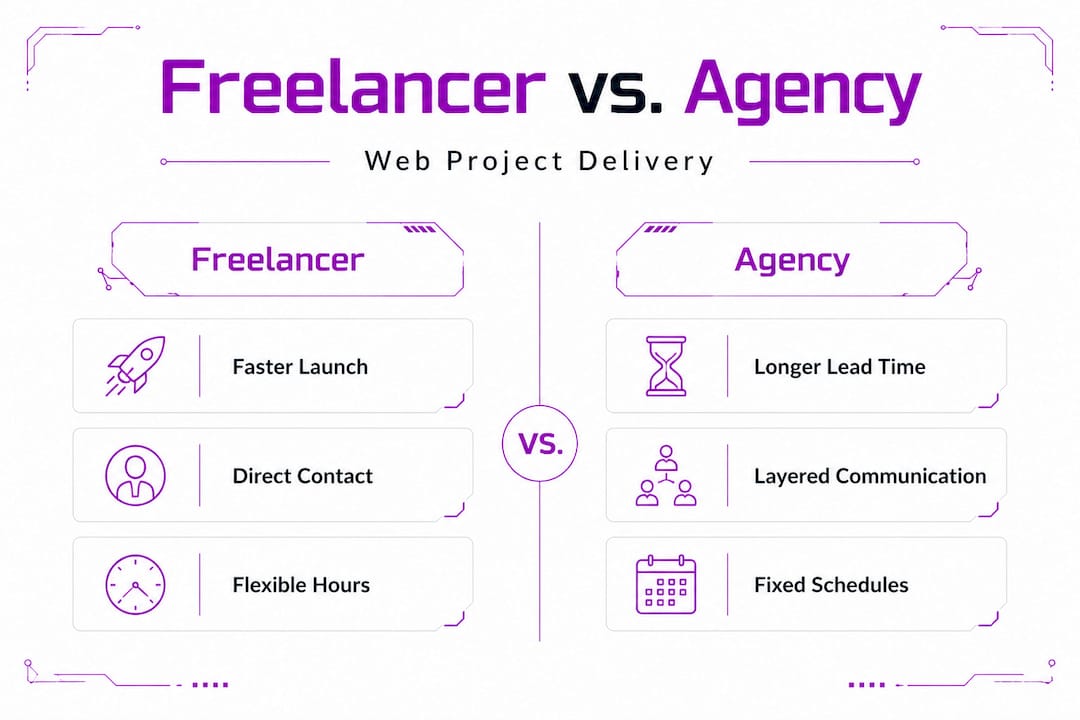
One of the most consistent advantages is speed of execution. Freelancers enable SMBs to meet tight deadlines and scale digitally by providing focused expertise on MVPs and specific tasks, freeing your internal team to concentrate on core operations. When you need a minimum viable product shipped in six weeks, a freelancer who has built similar products before is far more likely to hit that window than an agency still circulating a statement of work.
The services you actually need also tend to match what freelancers specialise in. Whether that is custom SaaS development for a niche product or a WordPress build for startups that needs to scale quickly, experienced freelancers bring specific technical depth rather than a generalist team spread thin across multiple client accounts.
Here is what freelance developers typically bring to small business engagements:
- Specialised technical skills in specific stacks, frameworks, or platforms, often more current than agency teams
- Rapid onboarding with minimal briefing overhead, since they are accustomed to self-directed work
- Direct accountability for deliverables, because there is no team to diffuse responsibility
- Flexible availability that can scale up during a product launch and scale back during quieter periods
- Niche knowledge of specific industries or technical domains that agencies rarely develop
Pro Tip: Before you hire, ask a freelancer to walk you through a project that resembles yours. How they explain their decision-making will tell you more than any portfolio screenshot.
Direct communication and streamlined workflow
One of the most underrated advantages of working with a freelance developer is what you do not have to deal with. No account manager translating your brief to a project manager, who then interprets it for a developer you may never meet. No approval layers. No waiting until Tuesday’s stand-up to flag a change.
When you work directly with a freelancer, your priorities land exactly where they need to. If you decide mid-sprint that the payment flow needs to work differently, you say so, the developer hears it directly, and you discuss the implications together. That kind of responsive iteration is genuinely difficult to achieve through an agency structure, where every change triggers a scope conversation and potentially a revised quote.
Direct communication with freelancers reduces layers, speeds feedback for well-defined web projects, and supports methodologies that include allocated hours for deadlines and milestone-based payments. This structure keeps both parties focused and honest.
A typical freelance workflow for a web project looks like this:
- Initial brief and discovery — you share your goals, constraints, and any existing assets or technical context
- Scoping and proposal — the developer outlines the approach, timeline, milestones, and pricing
- Development sprints — work is completed in structured phases, each with defined outputs
- Review and feedback — you test each milestone, provide notes, and agree on revisions
- Final delivery and handover — the completed project is deployed and documented, with support agreed separately
This structure is clear, repeatable, and easy to manage even if you have never hired a developer before. You always know what has been built, what is coming next, and what you are paying for.
“Working with a freelancer means your feedback reaches the person building your product the same day. That speed of iteration is worth more than most businesses realise until they have experienced the alternative.”
Here is a straightforward comparison to help you see the difference clearly:
| Factor | Freelance developer | Agency |
|---|---|---|
| Communication | Direct with the developer | Via account or project manager |
| Feedback speed | Same day or next day | Typically 2 to 5 working days |
| Scope changes | Discussed and priced quickly | Often triggers a formal change request |
| Cost transparency | Clear hourly or milestone rate | Bundled and often opaque |
| Availability | Flexible, responsive | Scheduled, structured |
| Personal accountability | High | Distributed across a team |
If you are exploring your options, reviewing the full range of developer services available gives you a useful benchmark for what an experienced freelancer should be able to deliver across both scope and price.
Agility in meeting deadlines and scaling digital projects
Speed and adaptability are not just nice extras for startups. They are survival requirements. Markets shift, investor expectations change, and the feature you thought was optional last month suddenly becomes the main thing users care about. A freelance developer is built for exactly that kind of environment.

Unlike agencies, which often book projects months in advance and assign resource based on internal availability, a freelance developer can typically begin within days. They ramp up intensity during crunch periods and ease off when the immediate pressure is resolved. That rhythm matches how small businesses actually operate.
Milestone-based payment structures reinforce this agility. Rather than committing a large budget up front, you pay as each stage of the project is completed and verified. This keeps your cash flow manageable and ensures that every payment corresponds to something you can actually see and test.
Freelancers enable SMBs to meet tight deadlines and scale digitally by providing focused expertise on MVPs and specific tasks, freeing internal teams for core operations. That focus is what makes the difference when deadlines are real and the margin for delay is small.
Consider the types of digital scaling tasks a freelance developer can handle efficiently:
- Building and shipping an MVP in four to eight weeks
- Integrating third-party APIs such as payment gateways, CRMs, or analytics platforms
- Migrating an existing site to a more scalable infrastructure
- Adding e-commerce functionality to an existing web presence
- Optimising performance and load times ahead of a marketing campaign
- Building custom admin tools or internal dashboards
- Setting up automated testing and deployment pipelines
Real-world examples demonstrate this well. Projects like Experience Avidity and MaintainHQ illustrate how a senior freelance developer can take a product from concept to live deployment, navigating both technical architecture and practical business requirements along the way.
| Project type | Typical freelance timeline | Typical agency timeline |
|---|---|---|
| Landing page or brochure site | 1 to 2 weeks | 4 to 6 weeks |
| WordPress business site | 2 to 4 weeks | 6 to 10 weeks |
| MVP web application | 4 to 8 weeks | 10 to 16 weeks |
| API integration project | 1 to 3 weeks | 4 to 8 weeks |
| E-commerce build | 3 to 6 weeks | 8 to 14 weeks |
These timelines are not guarantees, but they reflect the structural advantage that comes from fewer moving parts, faster decisions, and a single accountable developer fully focused on your work.
Cost efficiency and value for growing businesses
Budget is never an abstract concern for a small business. Every pound spent on development needs to justify itself in functionality, revenue, or capability. This is where freelance developers offer a structural advantage that is often misunderstood.
When you hire a full-time developer, you are paying a salary, national insurance contributions, pension contributions, holiday entitlement, sick pay, equipment, and the management overhead of having another employee. You are paying all of that whether the developer is building something critical or waiting for requirements to be clarified. Agencies bundle similar overheads into their day rates, which is why a straightforward website build can easily cost four or five times what a freelancer would charge for the same output.
Freelancers bill for the work. Nothing more. There is no internal meeting time wrapped into your invoice, no account management fee, no project coordinator cost. The milestone-based payment model keeps spending predictable and directly tied to delivered value, which is exactly what tight startup budgets require.
Understanding how to get the most from this structure is worth thinking through carefully. A good developer portfolio demonstrates not just technical competence but the kind of commercial awareness that makes a freelancer genuinely cost-effective to work with.
Here is a practical approach to cost-effective freelance hiring:
- Define your scope in writing before any conversation begins, even if it is rough
- Request a milestone breakdown so each payment maps to a specific deliverable
- Ask about revision limits per milestone to prevent scope creep from both sides
- Confirm ownership terms so you receive full rights to all code and assets on final payment
- Agree on a support period after launch, so you are not left without help if something breaks
- Check availability beyond the project in case you want ongoing support or future work
Pro Tip: Always verify project scope before agreeing to terms. A precise scope document protects both you and the developer, and a good freelancer will insist on it before starting work.
Reduced risk is as important as reduced cost. A bad agency engagement can lock you into a contract for months and cost tens of thousands of pounds. A misaligned full-time hire takes months to manage out and carries legal obligations. A freelance engagement that does not work out can usually be concluded cleanly at the next milestone, with minimal financial exposure.
The bigger picture: Why freelance is the ultimate startup hack
Most articles about freelance developers focus on practical benefits. Cost, speed, skill access. All of it is real, and all of it matters. But there is a deeper point that rarely gets made, and it is the one that actually separates the startups that grow from the ones that stall.
The real advantage of a freelance relationship is what it does to your technical decision-making. When you work directly with a senior developer who is invested in your project’s success, you gain access to thinking that would otherwise cost you an equity stake or an executive salary. A good freelancer will tell you when your planned architecture is going to create problems at scale. They will flag when a chosen platform is going to limit you in twelve months. They will push back on features that add complexity without adding value.
That kind of input is not what you get from a contractor who is executing a ticket. It is what you get from a partner who understands your business goals and has the technical depth to map a path towards them. Most early-stage founders dramatically overestimate how soon they need a full-time technical hire. The honest reality is that a trusted freelance relationship with a senior developer, structured around clear milestones and honest communication, can carry most businesses much further than they expect.
Custom SaaS expertise at the senior level is genuinely rare. When you find a freelancer who brings it, the right move is to treat that relationship with the same care you would give a key hire. Brief them well. Pay on time. Give clear feedback. The developers who deliver the most value are the ones who feel like genuine partners in what you are building, not just contractors completing a task list.
Technical debt is another dimension worth considering. Junior developers and inexperienced agencies often build fast but build fragile. The cost of unpicking poor architecture later, when your product has real users and your team is under pressure, almost always exceeds what you would have spent building it properly from the start. Experienced freelancers tend to build with longevity in mind, because their reputation depends on work that holds up over time.
Connect with proven freelance developers
If this article has shifted how you think about your next development hire, the logical next step is to see what experienced freelance work actually looks like in practice.
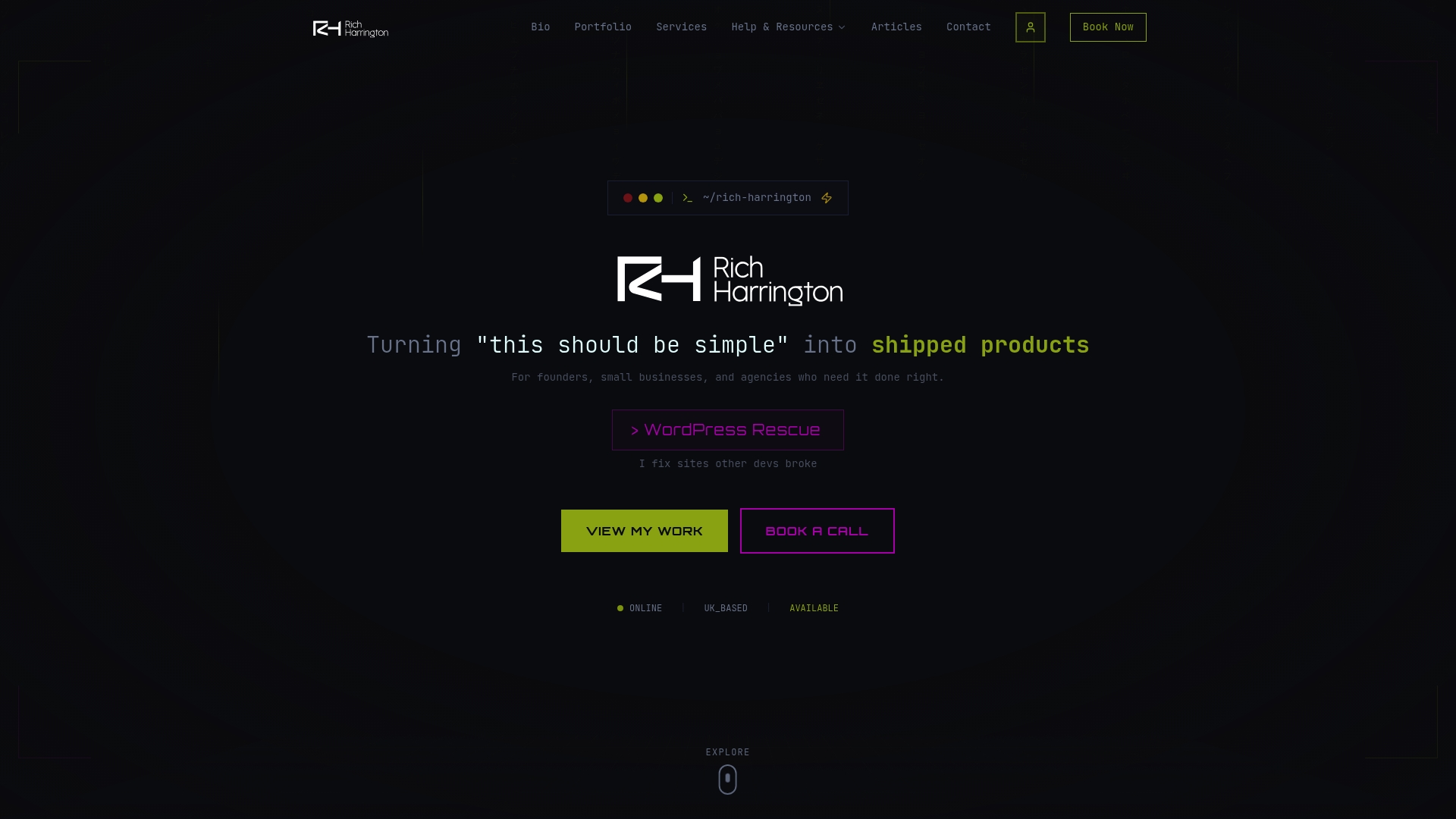
At richharrington.dev, you can explore a full range of freelance developer services, from fixed-price website packages through to bespoke application builds and API integrations. The Conversion Media project is a strong example of what a senior developer can deliver for a commercial client with real-world requirements and a defined budget. If you are ready to move forward with a specific build, the custom website development service page gives you a clear starting point for scoping and pricing your project. A straightforward consultation is the fastest way to find out whether the fit is right.
Frequently asked questions
How does a freelancer handle urgent deadlines?
Freelancers specialise in rapid turnaround by focusing on specific tasks and using milestone-based workflows for clear progress. Focused freelance expertise allows SMBs to meet tight deadlines without the delays introduced by agency scheduling and approval processes.
What is the typical communication process with a freelance developer?
Communication is direct and efficient, often including an initial briefing, milestone reviews, and iterative feedback loops to keep your project on track. Direct freelancer communication reduces layers and speeds up every stage of decision-making compared to working through an agency.
Is a freelance developer cheaper than an agency or full-time staff?
Freelancers typically offer meaningful cost savings by billing only for the hours worked and eliminating recruitment costs, employer contributions, and agency overheads. Milestone payment structures also give small businesses far greater control over when and how much they spend.
How do freelancers ensure project accountability?
They use milestone-based payments and clearly defined deliverables, so you retain visibility and control throughout the project rather than waiting until final delivery to review the work. This approach means problems are caught early and corrected before they compound.