
Discover what is a full stack developer in 2026. Learn about essential skills, job demand, and salary insights in this comprehensive guide.
What is a full stack developer: your 2026 guide
A full stack developer is a software professional who builds both the user-facing frontend and the server-side backend of an application, owning the entire process from concept to deployment. The role sits at the intersection of design, logic, and infrastructure, making it one of the most versatile positions in software development. Demand for full stack developers remains high, with over 26,000 active job listings in the US and a median annual salary of around £145,000 equivalent. That figure reflects how much businesses value professionals who can move fluidly across an entire technology stack without handing off work at every boundary.
What is a full stack developer’s core skill set in 2026?
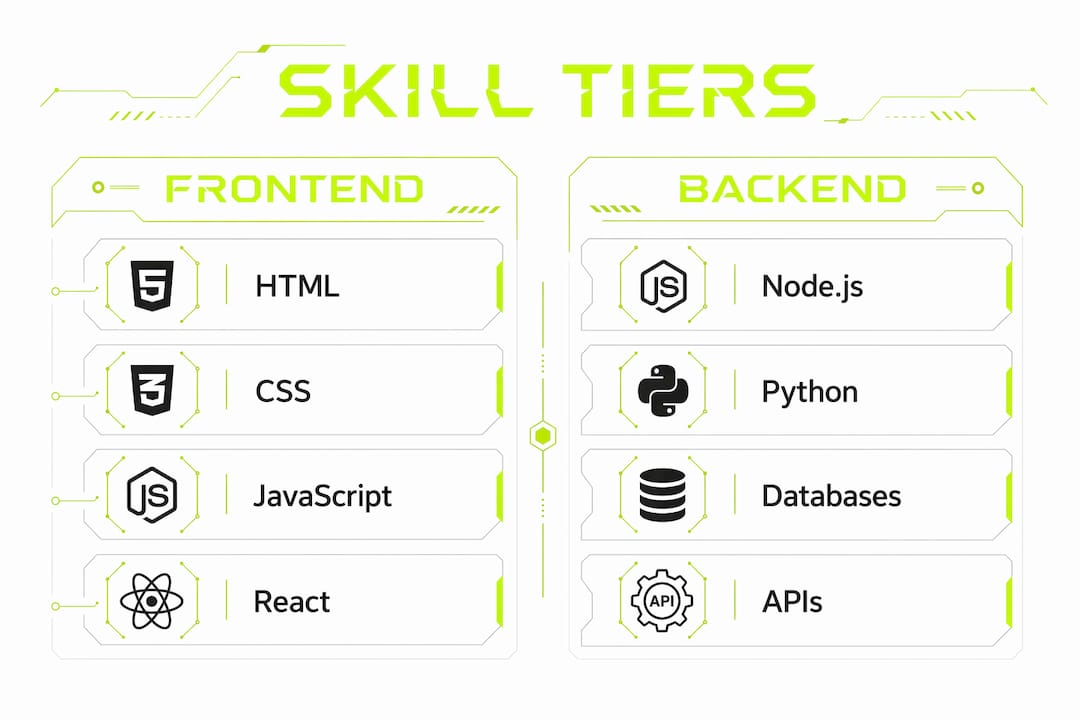
Full stack developer skills split into two clear layers: frontend and backend. Each layer demands its own tools, languages, and mental models.

Frontend: what users see and touch
The frontend covers everything a user interacts with directly. HTML and CSS form the structural and visual foundation. JavaScript is the engine that makes pages dynamic, and it is used by 66% of developers worldwide, making it the most widely adopted programming language in the industry. React, the component-based JavaScript library, is used by 44.7% of developers and remains the dominant choice for building modern user interfaces. Knowing React well gives you a significant advantage in the job market.
Backend: the logic and data layer
The backend handles business logic, data storage, and server communication. Node.js and Python are the most common server-side languages for full stack roles, with Java remaining popular in enterprise environments. Full stack development combines these backend languages with databases such as PostgreSQL (SQL) and MongoDB (NoSQL), connected via REST APIs or GraphQL. Understanding how data flows from a database through an API to a browser is the core competency that separates a full stack developer from a pure frontend specialist.
Emerging tier: cloud and DevOps
Beyond the core, 2026 full stack roles increasingly require familiarity with cloud platforms such as AWS, Azure, and GCP. Containerisation tools like Docker and Kubernetes handle consistent deployment environments. CI/CD pipelines automate testing and release cycles, reducing the risk of human error at deployment. These are no longer optional extras. They are standard expectations in most job descriptions.
| Skill tier | Technologies | Priority |
|---|---|---|
| Tier 1: Core frontend | HTML, CSS, JavaScript, React | Essential |
| Tier 1: Core backend | Node.js, Python, SQL, NoSQL, REST APIs | Essential |
| Tier 2: Cloud and DevOps | AWS/Azure/GCP, Docker, Kubernetes, CI/CD | Expected |
| Tier 2: Tooling | Git, VS Code, AI coding assistants | Expected |
Pro Tip: Specialise in one stack first, such as MERN (MongoDB, Express, React, Node.js), before broadening. Depth in one area builds the mental model you need to learn adjacent layers faster.
A structured learning path covering these tiers takes 8–10 months for most people working consistently. That timeline assumes focused study, practical projects, and regular code review.
How does a full stack developer differ from front-end and back-end developers?
The distinction matters if you are deciding which path to pursue or trying to hire the right person for a project. Each role has a different scope, a different daily rhythm, and a different relationship to the product.
A frontend developer focuses exclusively on the user interface. Their work lives in the browser: layout, animation, accessibility, and performance. A backend developer works on the server side, managing databases, authentication, APIs, and business logic. A full stack developer does both, and that breadth changes how they think about problems.
Full stack developers act as connectors between design, frontend, and backend teams. They translate a designer’s intent into working code, then wire that code to a database without losing context at either end. That ability to hold the whole system in mind at once is what makes them particularly valuable in smaller teams and startups.
The full stack role is prized in startups precisely because it accelerates prototyping. When one person can build a working feature end to end, feedback loops tighten and products ship faster. Larger organisations tend to use specialists, but they still need full stack developers to coordinate between teams and own features from start to finish.
| Role | Primary focus | Typical tools | Best suited to |
|---|---|---|---|
| Frontend developer | UI, UX, browser performance | React, CSS, JavaScript | Design-heavy products |
| Backend developer | APIs, databases, server logic | Node.js, Python, SQL | Data-intensive systems |
| Full stack developer | End-to-end feature ownership | All of the above | Startups, small teams, agile projects |
The key difference is not just technical breadth. It is the capacity for context switching between a UI bug in the morning and a database schema issue in the afternoon, without losing quality in either.
What are the typical career pathways for becoming a full stack developer?
Most full stack developers do not start as full stack developers. The common path begins with a specialism, either frontend or backend, and broadens over time as experience accumulates.
- Build a foundation in one area. Start with frontend development using HTML, CSS, and JavaScript, or choose backend with Python or Node.js. Depth in one area gives you a reference point for everything else.
- Complete a structured learning programme. A computer science degree remains the standard entry point. Typical professional requirements include a relevant bachelor’s degree and 2–5 years of industry experience. Bootcamps and self-directed learning are increasingly accepted, particularly when backed by a strong portfolio.
- Learn AI-powered coding tools. Proficiency in tools like GitHub Copilot or Cursor is rising in importance across job descriptions. These tools do not replace understanding. They amplify it. A developer who cannot read and verify AI-generated code is a liability. See Cursor vs VSCode for a practical comparison of AI-assisted development environments.
- Build projects that solve real problems. A portfolio of deployed applications carries more weight than certificates alone. Build a full CRUD application, deploy it to a cloud platform, and document your decisions. That process teaches you more than any course.
- Contribute to open-source or freelance work. Real codebases expose you to decisions you would never encounter in tutorials: legacy code, conflicting requirements, and production bugs under pressure.
Pro Tip: When building your portfolio, write a short README for each project explaining why you made specific technical decisions. Hiring managers read those notes. They reveal how you think, not just what you built.
The future of full stack development points toward developers who understand the full product lifecycle, not just the code. Architecture decisions, deployment strategy, and security awareness are increasingly part of the role at every seniority level.
Which soft skills separate good full stack developers from great ones?
Technical skills get you the interview. Soft skills determine how far you go and how much you earn. Architecture decisions are more highly valued than raw coding output, and that shift has real consequences for how you should develop your career.
- Documentation literacy. The ability to read, understand, and apply information from technical documentation is a key factor separating senior developers from juniors. Official docs are always more accurate than tutorials. Developers who rely on tutorials alone hit walls that documentation readers do not.
- Problem decomposition. Breaking a complex feature into smaller, testable parts is a skill in itself. Full stack developers spend 80–90% of their time on problem decomposition and coordination, not writing code. That ratio surprises most people new to the field.
- Communication with non-technical stakeholders. A developer who can explain a technical constraint to a client or product manager in plain language is worth considerably more than one who cannot. This skill directly affects project outcomes and client relationships.
- Systems thinking. Holding the full picture in mind, from database schema to browser rendering, allows you to anticipate how a change in one layer affects another. This is the mindset that distinguishes full stack developers from specialists who optimise within a single layer.
“Technical excellence is the baseline. The developers who advance fastest are those who make sound architectural decisions, communicate clearly, and own the full feature lifecycle from idea to deployment. Soft skills are not supplementary. They are the differentiator.”
Good developer communication is not a personality trait. It is a practised skill, and it compounds over time in the same way technical knowledge does.
Key takeaways
A full stack developer’s value lies not in knowing every technology, but in owning the full feature lifecycle with both technical depth and clear communication.
| Point | Details |
|---|---|
| Role definition | Full stack developers build both frontend and backend, owning features from concept to deployment. |
| Core skill set | JavaScript (66% usage), React (44.7%), Node.js, Python, SQL, NoSQL, and cloud platforms are the standard toolkit. |
| Career pathway | Most developers start as specialists and broaden over 2–5 years, supported by a degree or strong portfolio. |
| Soft skills matter | Problem decomposition and communication drive career progression more than coding volume alone. |
| Context switching | The ability to move fluidly between UI, API, and database concerns is the defining full stack competency. |
What I have learned after 20 years building full stack systems
The conversation around full stack development has shifted considerably over the past decade. When I started, the role was largely about knowing enough of each layer to get a project shipped. Today, the expectation is far higher. Businesses want developers who can make architectural decisions, understand security implications, and communicate trade-offs clearly to non-technical stakeholders.
The thing I tell people who are considering this path is this: the technology is the easy part. Languages change. Frameworks come and go. What does not change is the ability to decompose a problem, read documentation without hand-holding, and hold a system in your head well enough to predict how a change in one place breaks something three layers away.
I have also noticed that the developers who plateau early are usually the ones who optimise for output. They write a lot of code quickly. The ones who progress are the ones who slow down to ask why they are building something a particular way, and whether there is a better approach. That question, asked consistently, is what builds genuine seniority.
If you are new to the field, do not wait until you feel ready to build real things. Build something broken, deploy it, fix it under pressure, and learn what documentation actually means when you are stuck at 11pm with a production issue. That experience is irreplaceable.
— Richard
Full stack development services from Rich Harrrington Ltd
If you are a business that needs a full stack application built properly, Rich Harrrington Ltd offers custom SaaS development and bespoke website builds with no templates, no offshore handoffs, and no lock-in. Every project is handled directly by a senior engineer with over 20 years of experience across the full stack.
Whether you need a new platform built from scratch, a legacy system rescued, or a WordPress site brought back under control, the work is done by one person who understands every layer of the stack. You speak to the engineer, not an account manager. Get in touch to discuss your project and find out what a properly built application looks like.
FAQ
What does a full stack developer do day to day?
A full stack developer builds and maintains both the frontend interface and the backend logic of an application. In practice, most of their time goes on problem decomposition, code review, and coordinating with other team members rather than writing code alone.
What languages should a full stack developer learn first?
JavaScript is the most practical starting point, as it works on both frontend and backend via Node.js. Python is a strong second choice for backend work, particularly in data-heavy or API-driven applications.
How long does it take to become a full stack developer?
A structured learning path covering core frontend, backend, and cloud skills takes approximately 8–10 months. Reaching a professional level with deployable projects and industry experience typically requires 2–5 years.
Is full stack development better than specialising in front end or back end?
Neither is objectively better. Full stack roles offer broader career options and are particularly valued in startups and smaller teams. Specialist roles often command deeper expertise in one area and suit larger organisations with dedicated teams.
What is the difference between full stack and front end development?
A frontend developer focuses solely on the user interface and browser experience. A full stack developer handles the frontend and the backend, including servers, databases, and APIs, giving them end-to-end ownership of a feature.